Bureau of Lost Culture
Episodes

May 19, 2026
May 19, 2026
1hr 2 min
This is the second part of our conversation with Joe Rush, the initiator, mentor, and driving force behind The Mutoid Waste Company, that extraordinary countercultural endeavour to turn the waste of our industrial civilisation into art, performance, street theatre - and a way of life.
If you haven’t heard the first part, you might want to start here:
https://bureauoflostculture.podbean.com/e/20th-century-mutoid-man-part-1/
This time, we covered a huge amount of ground — Joe's personal story, the birth of the Mutoids and the UK counterculture of the ’80s and ’90s: squatting. We hear about the Peace Convoy, the Battle of the Beanfield, the free festival scene, the warehouse party scene, and how those worlds were pushed into exile in Europe, where they helped spark whole new cultural movements of festivals, parties, and creative rebellion including 'Tanghenge', the repurposing of abandoned Soviet MIG fighter jets after the fall of The Berlin Wall and much more..
----
If you’d like to get involved and contribute to this crazy endeavour, join our Patreon HERE
Thank you to everyone who’s signed up to support the show —that really does mean a lot. We have chosen not to carry ads here; it simply wouldn’t sit right with what we do. But that does mean we can really benefit from your support, in whatever form that takes. not just financial.
Stephen
#BureauOfLostCulture
#JoeRush
#MutoidWaste
#ScrapArt
#IndustrialArt
#BurningManArt
#Counterculture
#RecycledArt
#PostIndustrial
#UndergroundCulture

Mar 17, 2026
Mar 17, 2026
1hr 2 min
If you had been at the Glastonbury Festival in 1987, you may have seen a familiar silhouette emerging in the dawn light - upright monoliths arranged in a circle. Was it Stonehenge - magically transferred here across the Salisbury plain?
No, it was ‘Carhenge'- a circle of upright cars, their chassis standing like monoliths, the archaeology of the automobile age
And imagine ‘Tankhenge', a gateway made from abandoned Soviet tanks assembled in Berlin just after the fall of the Berlin Wall — the wreckage of the Cold War turned into a piece of anarchic sculpture
Or imagine a huge mechanical creature crawling across the desert at the Burning Man festival in Nevada
These strange and spectacular visions all come from the same source: The Mutoid Waste Company— a collective that, since the early 1980s, has been transforming the debris of industrial civilisation into giant sculptures, mutant vehicles and temporary worlds built from waste.
This is the first part of our conversation with Joe Rush, the artist at the centre of it all. It takes us into the world of late 1970s West London, the punk years, the alternative communities and squats of the People's Republic of Frestonia, and the signpist along the way to becoming a Mutoid...
---
If you’d like to get involved and contribute to this crazy endeavour, join our Patreon HERE
Thank you to everyone who’s signed up to support the show —that really does mean a lot. We have chosen not to carry ads here; it simply wouldn’t sit right with what we do. But that does mean we can really benefit from your support, in whatever form that takes. not just financial.
Stephen
Photograph: Courtesy of Guy Mayhew
#BureauOfLostCulture
#JoeRush
#MutoidWaste
#ScrapArt
#IndustrialArt
#BurningManArt
#Counterculture
#RecycledArt
#PostIndustrial
#UndergroundCulture

Feb 3, 2026
Feb 3, 2026
57 min
Over the last century, the word Shaman has been embraced by artists, hippies, psychonauts and spiritual rebels.
In the 1960s and 70s, shamanism had become a kind of countercultural shorthand for altered states, secret, magical knowledge, and ways of seeing outside rationalism, capitalism, and institutional power.
Shamans appeared in underground books, on psychedelic record sleeves, in communes and consciousness-raising circles. Writers like Carlos Castaneda blurred the line between ethnography and spiritual fiction. Psychedelics were framed as modern shamanic initiation rites.
But as shamanism was absorbed into Western counterculture, the messy realities of the original shamanic cultures - land, lineage, service to the community, and sometimes danger - were replaced with personal visions, journeys and individual transformation.
Our guest today is social anthropologist Max Carocci whose work looks at how this happened. His latest book, Shamans: The Visual Culture, is an incredible portrait of the original shamanic worlds with an eclectic array of the sacred objects, tools, clothing and images shamans have made, along with the way they been photographed, filmed, and mythologised.
Max is especially interested in how these images have turned the shaman into a symbolic figure — part spiritual rebel, part cypher for Western longing — while the original shamans continue to live under pressure from colonialism, repression and environmental loss.
---
If you’d like to get involved and contribute to this crazy endeavour, join our Patreon HERE
Thank you to everyone who’s signed up to support the show —that really does mean a lot. We have chosen not to carry ads here; it simply wouldn’t sit right with what we do. But that does mean we can really benefit from your support, in whatever form that takes. not just financial.
Stephen
#counterculture, #shamanism, #shaman, #tuvan, #galba, #newage, #spiritualisn, #magic, #ancestor

Nov 25, 2025
Nov 25, 2025
1hr 3 min
We are on the brink of a new nuclear age - the energy crisis, the push towards net zero and the gargantuan power requirements of AI demand it - or so we are told.
But here in Britain, the old nuclear age isn’t just a historical footnote - it’s etched into the very landscape.
Tom Bolton went on an epic journey around the UK to explore the extraordinary, imposing locations in that landscape, from the 16 vast concrete cathedral-like power stations on remote coasts to the hidden nuclear missile silos that cast a long, physical, cultural and environmental shadow over Albion - past, present, and into the distant future.
His extraordinary new book, Atomic Albion: Journeys Around Britain's Nuclear Power Stations, not only maps the physical geography of Britain’s atomic ambitions, but also digs into their psychic, mythic and cultural impact.
With great power comes great responsibility, as Spider-Man's Uncle Pete said. And of course, where there is state power, there has always been countercultural dissent, quite rightly in this case, because the power we unleashed by splitting the atom could bring us to the very brink of oblivion..
---
If you’d like to get involved and contribute to this crazy endeavour, join our Patreon HERE
Thank you to everyone who’s signed up to support the show —that really does mean a lot. We have chosen not to carry ads here; it simply wouldn’t sit right with what we do. But that does mean we can really benefit from your support, in whatever form that takes. not just financial.
Stephen
#atomic #atomicage #nuclear #nuclearpower #nuclearweapons #atombomb #powerstaions #albion #atomicalbion #counterculture

Dec 1, 2024
Dec 1, 2024
53 min
We are joined by oral historian and broadcaster Alan Dein.
We discuss the history, culture and technology of the coin-operated machines that allowed ordinary people to make a record of themselves in the West (and, in adapted bootlegged form, to create records of forbidden music in the Soviet Union) long before the advent of tape or digital recording.
We hear a selection of extraordinary recordings of strange, moving voices from Alan’s collection and learn how the records were used to send messages home from the war, record visits to tourist destinations or to capture the sounds of loved ones in a way that had never been possible before.
For More on X-Ray Audio
www.x-rayaudio.com
For More on Bureau of Lost Culture
www.bureauoflostculture.com
---
If you can contribute to this crazy endeavour, join our Patreon HERE
Thank you to everyone who’s signed up to support the show —that means a lot. We have chosen not to carry ads here; it simply wouldn’t sit right with the spirit of the Bureau. But that does mean we can benefit from your support, in whatever form that takes, not just financial.
Stephen
Oct 16, 2023
Oct 16, 2023
59 min
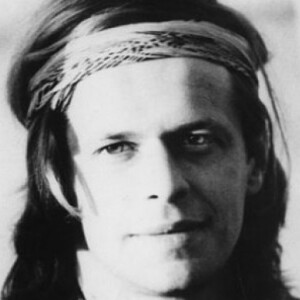
*He is perhaps the biggest name in Russian rock music, famous as the leader of the band Aquarium throughout his homeland and 'Outer Russia’ (as the huge and growing number of Russian emigres are called), but he is now listed as a “foreign agent” - basically an anti-patriot, a traitor, for criticising Russia’s war
*Aquarium were pioneers of the clandestine homegrown rock scene that was born in early '70s USSR before emerging from the underground to become the pied pipers of perestroika, selling millions of albums (but usually getting paid nothing).*After a long and illustrous career, Boris Grebenshikov now lives in London and in response to the conflict has put together an extraordinary compilation aiming to help children in Ukraine - and for the friends and fans he has had to leave behind.
*The album features a star-studded ensemble including Dave Stewart of The Eurythmics, Jethro Tull, Marianne Faithful, Marc Almond, The Waterboys, Jackson Brown, Crowded House and many others. *We talk of the USSR in the 60s, cultural censorship,the power of music, the KGB arresting your friends, being back on the outside yet again - and we hear selections from the 'Heal the Sky’ album.
Thanks to Alex Kan for making this happen.
*For more details and to support the project: Heal The Sky
*Let us know where you are at (a few questions about you)
*Get Our Bulletin
---
If you can contribute to this crazy endeavour, join our Patreon HERE
Thank you to everyone who’s signed up to support the show —that means a lot. We have chosen not to carry ads here; it simply wouldn’t sit right with the spirit of the Bureau. But that does mean we can benefit from your support, in whatever form that takes, not just financial.
Stephen
#counterculture #music #ussr #soho #aquarium #ukraine #russia #war #borisgrebenshikov #perestroika #coldwar #russinemeigre #russianrock

Aug 6, 2023
Aug 6, 2023
59 min
*Roger Huddle is a born and bred Londoner, a working class music-mad mod who grew up in the 50s, got radicalised in the 60s and became a co-founder of one the most successful activist groups of the 70s - Rock Against Racism (RAR).
*RAR was a political and cultural movement which emerged in 1976 in reaction to a rise in racist attacks on the streets of the United Kingdom and increasing support for the far-right National Front at the ballot box.
•Between 1976 and 1982 RAR activists organised national carnivals and tours, as well as local gigs and clubs throughout the country bringing together black and white fans in their common love of music.
*The musicians came from all pop music genres including some of the UK's biggest post-punk and Reggae artists including The Clash, Misty in Roots, Elvis Costello and X-Ray Spex.
*Roger came into the Bureau to tell us all about it and to school us in the London club scene of the 60s, radical socialism, agit prop, agit-pop, cultural revolution - and William Morris.
•For more on Roger:
•For more on RAR and Syd Shelton check out the film White Riot
•Image courtesy: John Sturrock
---
If you can contribute to this crazy endeavour, join our Patreon HERE
Thank you to everyone who’s signed up to support the show —that means a lot. We have chosen not to carry ads here; it simply wouldn’t sit right with the spirit of the Bureau. But that does mean we can benefit from your support, in whatever form that takes, not just financial.
Stephen
#counterculture #rockagainstracism #rogerhuddle #sydshelton #thenationalfront #racism #thebeats #london #walthamstow #williammorris #socialism #revolution #rockrevolution #theclash #agitprop #trotsky
Feb 7, 2023
Feb 7, 2023
1hr 15 sec
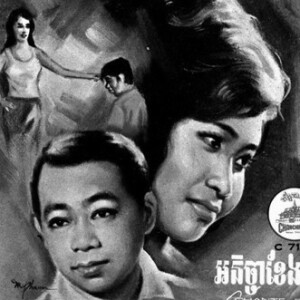
*In the swinging 1960s, after nearly a century of colonisation, Cambodia was ready to rock. Young musicians from the countryside flocked to the vibrant cosmopolitan capital city of Phnom Penh. The city was a melting pot of sound: old fashioned rock’n’roll, early heavy metal, crooners and swooners and love duets.
*Then on 17th April 1975, the music stopped.
the Khmer Rouge captured Phnom Penh and began a genocide. Around 90% of the musicians died in the killing fields.
*DEE PEYOK joins us to talk about 'Away From Beloved Lover'(Granta), her extraordinary book detailing the lost world of amazing music that flourished between 1955 and 1970 in Cambodia.
*And we hear of Dee’s own journey - an extraordinary odyssey into the heart of darkness - and light - in search of this lost world.
For more on Away From Beloved Lover: https://granta.com/products/away-from-beloved-lover/
For The Bureau of Lost Culture: www.bureauoflostculture.com
---
If you can contribute to this crazy endeavour, join our Patreon HERE
Thank you to everyone who’s signed up to support the show —that means a lot. We have chosen not to carry ads here; it simply wouldn’t sit right with the spirit of the Bureau. But that does mean we can benefit from your support, in whatever form that takes, not just financial.
Stephen
#Cambodia #KhmerRouge, #Sinsisamouth, #DeePayok, #PhnomPenh, #killingfields, #surfrock, #censorship, #Cambodiarocks, #Vietcong, #genocide #vietnamwar
Dec 4, 2022
Dec 4, 2022
57 min
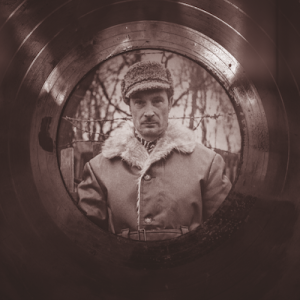
*During the Cold War era, the songs that Soviet citizens could listen to were ruthlessly controlled by the state. But a secret underground subculture of music lovers and bootleggers defied the censors, building recording machines and making their own extraordinary discs of forbidden jazz, rock ‘n’ roll, and Russian music, cut onto used hospital x-ray film.
*Today’s special guest is, er… me, Stephen Coates
*My new book BONE MUSIC details how the x-ray bootleggers worked, and reveals for the first time, the hidden history of their archivist precursors in Budapest. Who were they? Why did they do it and how was this Roentgenizdat (private pressing on xray) even possible?
*Cultural Commentator TRAVIS ELBOROUGH returns to the Bureau and we swap seats so that he can run the show
*We dig deep into the culture of the Soviet X-Ray Underground, the character of the bootleggers, cold war culture, cultural repression and ask if Bone Music has anything to say about current censorship in Russia.
*For More on BONE MUSIC the book: https://www.x-rayaudio.com/bonemusicbook
*The Bureau of Lost Culture: https://www.bureauoflostculture.com
---
If you can contribute to this crazy endeavour, join our Patreon HERE
Thank you to everyone who’s signed up to support the show —that means a lot. We have chosen not to carry ads here; it simply wouldn’t sit right with the spirit of the Bureau. But that does mean we can benefit from your support, in whatever form that takes, not just financial.
Stephen
#bonemusic #x-rayaudio #xrayaudio #sovietunion #coldwar #forbiddenculture #roentgenizdat #bonerecords #rockonribs #
Sep 12, 2022
Sep 12, 2022
1hr 34 sec
*"Teenage savages go wild in a jungle of lust and lawlessness!"
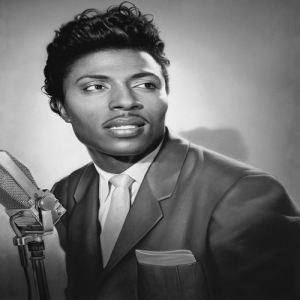
*Countercultural commentator and writer JOHN HIGGS comes to the Bureau. We head out into the feverish febrile pheromone filled phase of self consciousness, sex drugs and rock’n’roll known as adolescence as we investigate the birth of the teenage in the late 40s and 50s.
*Was it all really kicked off by Little Richard’s Tutti Frutti?
*We chart the rise of youth culture on both sides of the Iron Curtain and debate that while ‘all you need is love’, ‘you can’t always get what you want’ as we trace counterculture through beats, mods, hippies, punks, ravers, grunge and britpop, touch down briefly on gender politics and the death of Kurt Cobain and wonder if 70 will one day be the new seventeen.
For more on John https://johnhiggs.com
The Bureau of Lost Culture https://www.bureauoflostculture.com
---
If you can contribute to this crazy endeavour, join our Patreon HERE
Thank you to everyone who’s signed up to support the show —that means a lot. We have chosen not to carry ads here; it simply wouldn’t sit right with the spirit of the Bureau. But that does mean we can benefit from your support, in whatever form that takes, not just financial.
Stephen
#counterculture #littlerichard #teenage #rockandroll #kurtcobain #beatles #rollingstones #hippie
Feb 1, 2021
Feb 1, 2021
1hr 1 min
Forget California, swinging sixties London or the Paris riots for a moment, Estonian filmmaker Terje Toomistu joins us to talk about the hippie movement of the Soviet Union.
It had all the characteristics of Western hippiedom: long hair, groovy music, esoteric spirituality and drugs. The only thing missing perhaps was the radical public politics that would have pushed the repressive Soviet authorities into drastic, brutal action
Terji’s film, with its super groovy soundtrack of rare tunes, provides a fascinating glimpse into a moving, daring subculture that flourished east of the Iron Curtain.
More about the Soviet Hippies film and Terje www.soviethippies.com
For more on the Bureau of Lost Culture:
www.bureauoflostculture.com
---
If you can contribute to this crazy endeavour, join our Patreon HERE
Thank you to everyone who’s signed up to support the show —that means a lot. We have chosen not to carry ads here; it simply wouldn’t sit right with the spirit of the Bureau. But that does mean we can benefit from your support, in whatever form that takes, not just financial.
Stephen
Sep 14, 2020
Sep 14, 2020
1hr 9 min
We meet with film director Olivia Litchenstein and BBC Russian Arts presenter Alexander Kan to hear about the extraordinary musician Sergey Kuryokhin, ‘the Soviet Punk Frank Zappa’ who with his underground cohorts in Leningrad tried to soundtrack perestroika as the cold war crumbled around them.
Olivia tells of the strange circumstances of the making of the BBC TV series Comrades during the twilight of the Soviet Empire, with tales of tapes smuggled in diplomatic bags and a bizarre intervention by Ronald Reagan.
Alex tells of his friendship with Kuryokhin, an incredibly talented, charming musical provocateur whose live performances astonished Russian audiences. And we learn of the bizarre prank Kuryokhin played on National TV claiming Lenin was a magic mushroom, just one of many dadaist interventions he made before his tragically early death.
The Comrades program featuring Sergey Kuryokhin: https://youtu.be/ibY2lXdgdnM
For more on The Bureau of Lost Culture:
www.bureauoflostculture.com
---
If you can contribute to this crazy endeavour, join our Patreon HERE
Thank you to everyone who’s signed up to support the show —that means a lot. We have chosen not to carry ads here; it simply wouldn’t sit right with the spirit of the Bureau. But that does mean we can benefit from your support, in whatever form that takes, not just financial.
Stephen
Sep 14, 2020
Sep 14, 2020
59 min
This Episode explore three stories of cold war era radio in the USSR: Soviet Radio Jammers, the Russian ‘Woodpecker’ and the Soviet Radio Hooligans
We meet with Russian broadcaster Vladimir Raevsky to talk about radio jamming in cold war era Soviet Union.
As East and West super powers square up to each with nuclear weapons, a parallel invisible war is being fought in the airwaves.
Hundreds of millions of dollars are spent on broadcasting propaganda and music into the Soviet Union - and on attempting to block them from being heard.
Stephen tells the strange story of the ‘Russian Woodpecker’, a dystopian broadcasting station near the Chernobyl nuclear reactor and alleged attempts to brainwash the West using radar.
BBC Russian Arts correspondant Alex Kan, sits in a London cafe and tells of the brave young ‘Radio hooligans' who broadcast their own individual pirate radio shows during his youth in the USSR.
For More on the Bureau of Lost Culture:
www.bureauoflostculture.com
---
If you can contribute to this crazy endeavour, join our Patreon HERE
Thank you to everyone who’s signed up to support the show —that means a lot. We have chosen not to carry ads here; it simply wouldn’t sit right with the spirit of the Bureau. But that does mean we can benefit from your support, in whatever form that takes, not just financial.
Stephen